
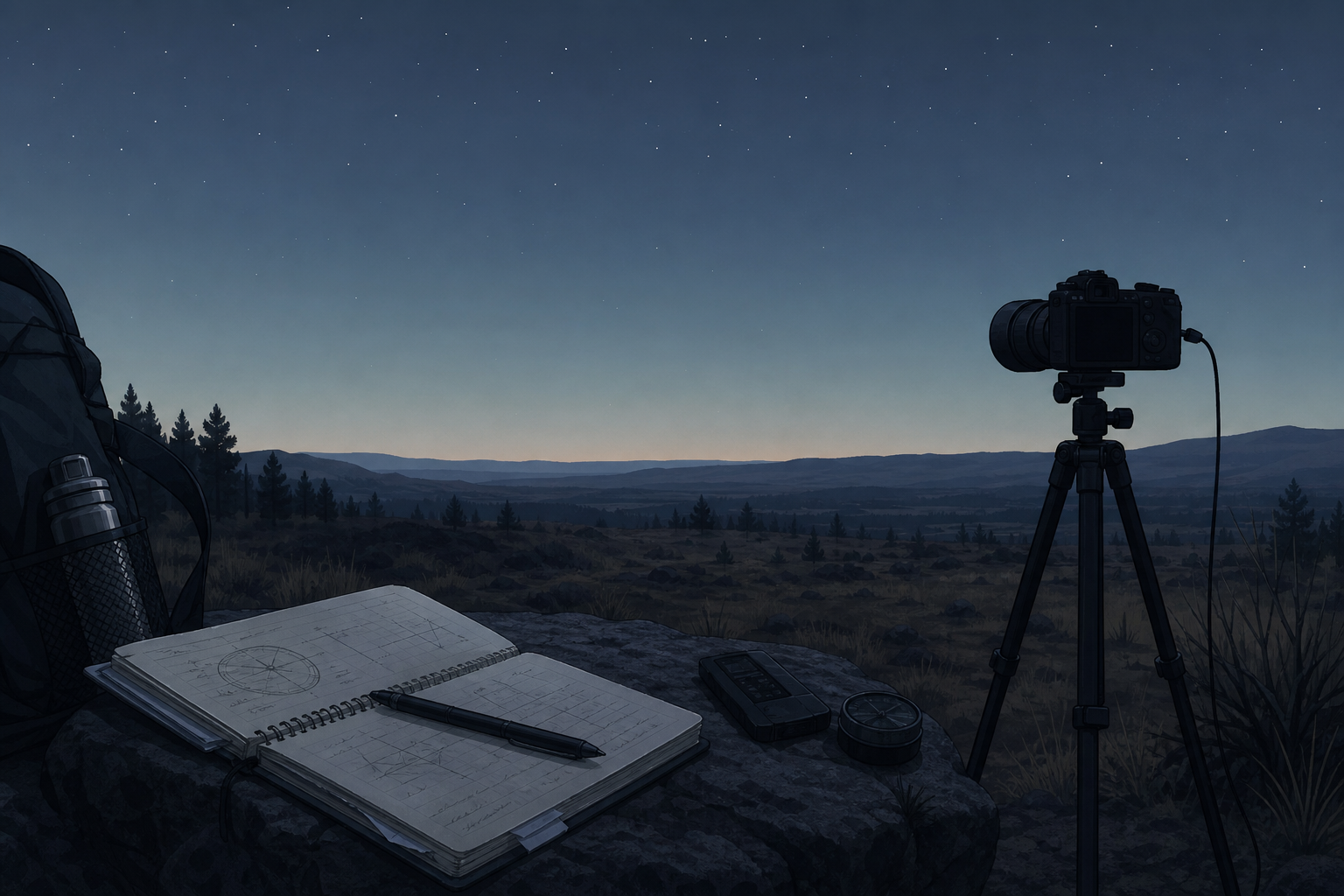
The article considers drones, atmospheric effects, optical errors and a speculative “living light” hypothesis, but provides no identifiable case or independently examinable evidence.
A USA Herald article, “Are UAP Orbs Material Objects or Adversary Drones?”, argues that luminous, apparently responsive lights should not automatically be treated as conventional aircraft or physical craft. It proposes inquiry into drones, atmospheric or electrical effects, optical and sensor errors, and a speculative “living light” hypothesis.
It identifies no incident, location or witnesses and supplies no recordings, instrument data or independently available government findings for assessing its underlying reports. It is therefore a proposed approach to unusual-light reports, not evidence that any orb is material, autonomous, adversarial or alive.
The proposed hypothesis tree
- The article says witnesses have described small luminous spheres near homes, roads, trees and people, hovering or changing direction abruptly. Some compare their movement with animals moving through an environment; the author says this is not proof of an organism, but a reason to establish whether an event is real, measurable, repeatable and independently recorded before assigning a cause.
- It also describes accounts of a larger matte-green glow or luminous mass with smaller lights, while cautioning that the accounts do not establish conflict, control, predation or a hierarchy. It proposes synchronized observation to test whether apparently related events are causally connected.
- The article treats visible light as an observation, not an identification: it may be associated with objects, combustion, ionized gas, plasma, reflections, electrical discharge, camera artifacts or other processes. Its hypothesis tree includes conventional or classified technology; atmospheric or optical phenomena; misidentification and sensor limits; an unknown energy-based process; and non-classical “living light.”
- The author argues that a technology-first approach could be too narrow if some reports concern something other than conventional hardware. That concerns the scope of inquiry, not demonstrated non-material or biological properties in any light report.
No case file accompanies the argument
The article does not identify the witnesses or say when and where observations occurred. It provides no original photographs, video files, radar data, weather records, aircraft information or chain-of-custody documentation.
It also offers no case-by-case assessment of whether reported movement remains anomalous after viewing geometry, distance, perspective, exposure settings, image processing and ordinary aerial traffic are considered. It cannot establish whether it concerns one event, unrelated reports, a recurring local pattern or hypothetical priorities. Nor does it establish that a government inquiry into a “living light” mystery has opened, despite its headline.
The recovered page has two dates: metadata lists August 28, 2026, while page text dates the article August 24, 2026. Whether this reflects publication, an update, indexing or template information is unclear, so its first-publication date cannot be stated precisely.
Editorial analysis
What would make the question testable
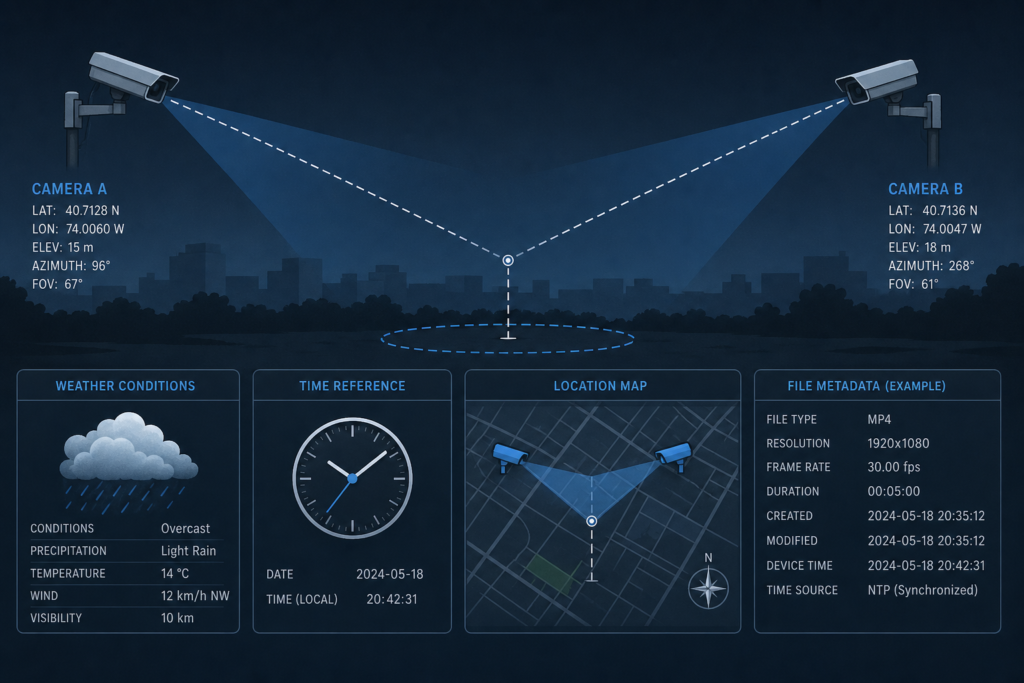
The article is most useful in urging tests against competing explanations. A serious inquiry would require contemporaneous, independently preserved records: calibrated video from more than one position; precise time and location data; weather and astronomical conditions; available air-traffic and drone information; and documentation of how each file was obtained.
Those records could distinguish apparent maneuvering from perspective effects, lens behavior, exposure changes or observer movement. A broad list of hypotheses is not evidence for each hypothesis.
The “living light” idea would require observations not adequately explained by conventional sources, atmospheric or electrical processes, optical effects, sensor artifacts and misidentification, followed by reproducibility or independent corroboration. Until a documented case reaches that threshold, it remains the article’s speculative hypothesis, not a classification of a known phenomenon.
A disciplined process has value without presuming an exotic answer. Identifying drones, aircraft, illumination devices and sensor effects may carry public-safety or national-security relevance; for unresolved events, preserving high-quality evidence is more useful than assigning a label.
What would advance the story
- Further reporting needs a specific observation and material others can examine: original time-stamped media, independent witness accounts, relevant flight or weather data, and a clear statement from any agency said to be investigating. Until then, the article is a call for wider, falsifiable inquiry into reported lights, not confirmation of a new UAP category.
Sources
Related coverage
- Roscommon Herald Reports RTÉ Documentary on Boyle Lights and Lough Key Experiment
- Recovered World Cup guide offers no evidence for ‘Ufo Files’ title
- DeFi Rate puts odds of qualifying U.S. extraterrestrial declaration by 2026 at 4.5%
- Reported Gallup Poll Finds 78% Think U.S. Withholds UFO Information
- Space Daily says Mars, K2-18 b and UAP evidence remains unconfirmed
Follow the story

Pentagon Notice Proposes Sole-Source Subscription to Private UAP Archive
Washington Headquarters Services says AARO would receive digital access to proprietary historical data, metadata and analysis from a New Mexico records center; the…
Former Congressional Staffer Details UAP Briefing Claims in Connecticut Testimony
Kirk McConnell’s letter supporting a Connecticut UAP-study bill says senators and staff heard accounts of alleged intelligence collection, crash retrieval and reverse engineering.…

National Archives Offers Bulk Downloads of UAP Records, Including Project Blue Book Files
The portal provides ZIP archives and JSON metadata for catalogued agency and historical holdings, though some records remain available only for onsite viewing.