
Washington Headquarters Services says AARO would receive digital access to proprietary historical data, metadata and analysis from a New Mexico records center; the notice does not specify the cost, deliverables or whether the material could later become public.
Washington Headquarters Services, acting for the Pentagon’s All-domain Anomaly Resolution Office, published a notice of intent to award a sole-source subscription for historical UAP data and analysis to the National Unidentified Flying Object Historic Records Center in Rio Rancho, New Mexico. The proposed service would give AARO digital access to the center’s proprietary historical data, metadata and analytical products.
The notice documents a records-access effort, not a Pentagon finding on any individual UFO or UAP report. It shows the office charged with resolving anomalous reports seeking structured access to a large privately assembled historical collection.
The posting describes a commercial subscription with one base year and four possible one-year option periods. Posted July 31, it set an August 17 deadline for capability statements and was archived September 1. A sole-source notice is not an award; the public notice provides neither a dollar value nor an itemized account of what AARO would receive.
The notice describes access, not a transfer of files
- The SAM.gov posting identifies the contemplated arrangement as a firm-fixed-price contract for a “Historical UAP Data and Analysis Subscription.” Washington Headquarters Services posted it for AARO and named the National UFO Historical Records Center as intended supplier.
- It describes continuing digital access to material the center considers proprietary, pointing to a subscription rather than government ownership of an identified set of physical records.
- DefenseScoop reported that the effort focused on material predating 1990 and that a War Department official said market research found no other organization with comparable historical depth, unique records and specialized analytical expertise. That is the agency’s stated sole-source rationale, not independent validation of every archive item.
- The notice allowed prospective sources to submit capability statements before the deadline. Its archival does not disclose whether another source challenged the proposal, a contract was executed or the subscription began.
What the archive says it holds
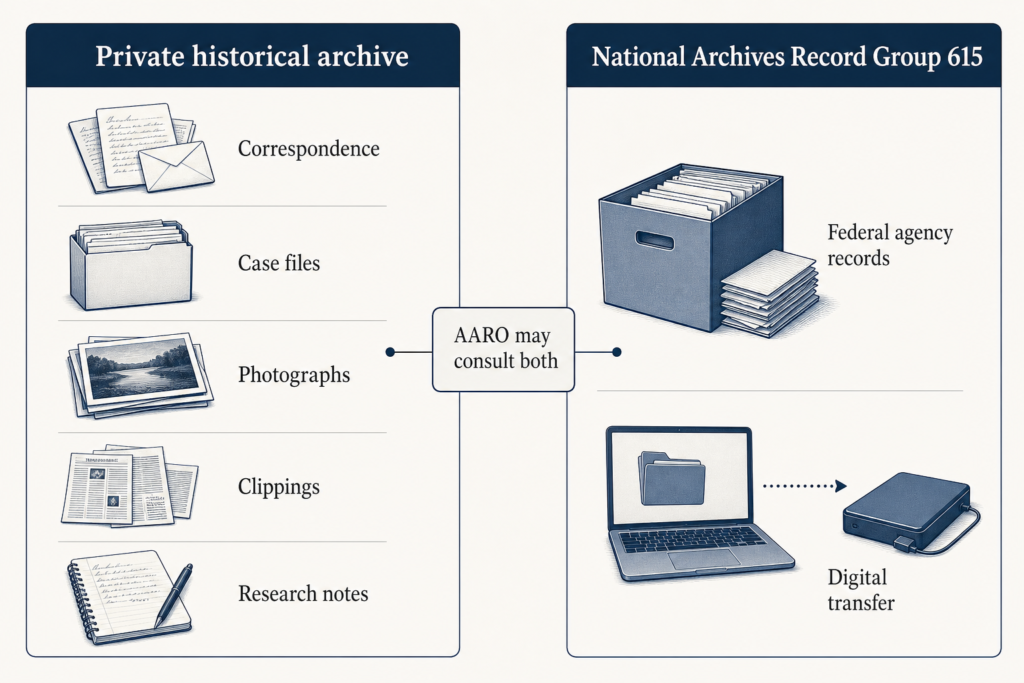
The National UFO Historical Records Center describes holdings including official and civilian case files, correspondence, photographs, recordings, books, magazines, news clippings, research notes, microfilm, and physical or digital artifacts. It says inherited collections include material from the National Investigations Committee on Aerial Phenomena, the Center for UFO Studies and the Aerial Phenomena Research Organization, plus papers from individual researchers.
The center says it aims to preserve, digitize, catalogue and eventually provide access to historically important material that might otherwise be lost. DefenseScoop reported that it contains hundreds of thousands of case files and records unavailable elsewhere.
For AARO, potential value may extend beyond particular reports to cataloguing, provenance work and links between records scattered across collections. But preserving contemporaneous documents does not settle the events they describe; the center’s account establishes what it says it assembled, not each item’s reliability, completeness or evidentiary weight.
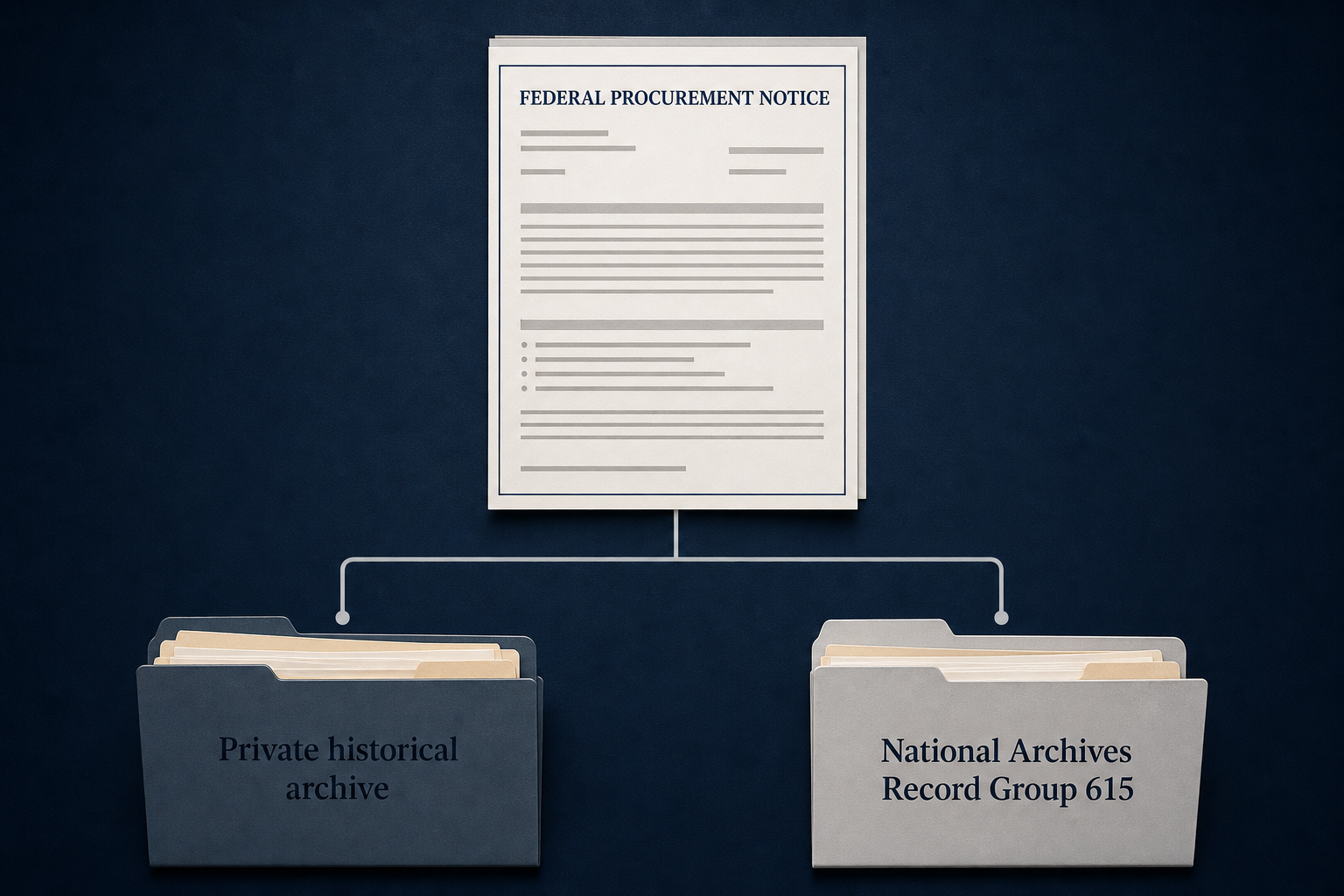
A private archive is separate from the federal UAP collection
The proposed subscription would be separate from the National Archives’ federal UAP records program. The National Archives says Record Group 615 contains UAP records received from agencies including the Office of the Director of National Intelligence, Office of the Secretary of Defense, National Security Agency, State Department, FBI and Air Force.
Under the 2024 National Defense Authorization Act, agencies must transfer digital copies of UAP records, and NARA says material is added to Record Group 615 on a rolling basis. The collection consists of agency records; the New Mexico center is privately assembled and includes official and civilian material.
DefenseScoop reported that AARO’s congressional responsibilities include reviewing U.S. government involvement with UAP since 1945. Private collections may retain copies, correspondence and research trails useful for locating or interpreting older government-era material when originals are elsewhere, incomplete or not public.
The terms and public-access rules remain unknown
- The notice does not say whether an award was made, what it would cost, which datasets, metadata fields and analytical products would be included, or whether AARO could publish records, citations or derived findings obtained through the subscription.
- It is unknown whether proprietary material AARO consults would later go to the National Archives, be released by the center, be summarized in AARO reporting or remain available only under subscription terms. Record Group 615’s rolling transfers do not resolve this, because they concern records received from federal agencies, not every private source an agency may consult.
- DefenseScoop reported that the department declined to disclose an estimated total cost and the center did not respond to its request for comment before publication. The arrangement’s scale and eventual transparency conditions remain unresolved.
Editorial analysis
What would clarify the record
AARO’s interest points to a practical problem in reconstructing a long institutional history: relevant records and the trails identifying them may sit outside government custody. It does not show AARO endorsed any private investigator’s conclusions or that access will produce new findings about anomalous cases.
An award notice or contract record, deliverables description and explanation of how AARO will preserve provenance would clarify the arrangement. If AARO later cites this material, readers will need to know whether a conclusion rests on an original government record, a private copy, a witness account, later analysis or a combination.
Sources
Follow the story
Former Congressional Staffer Details UAP Briefing Claims in Connecticut Testimony
Kirk McConnell’s letter supporting a Connecticut UAP-study bill says senators and staff heard accounts of alleged intelligence collection, crash retrieval and reverse engineering.…
National Archives Offers Bulk Downloads of UAP Records, Including Project Blue Book Files
The portal provides ZIP archives and JSON metadata for catalogued agency and historical holdings, though some records remain available only for onsite viewing.
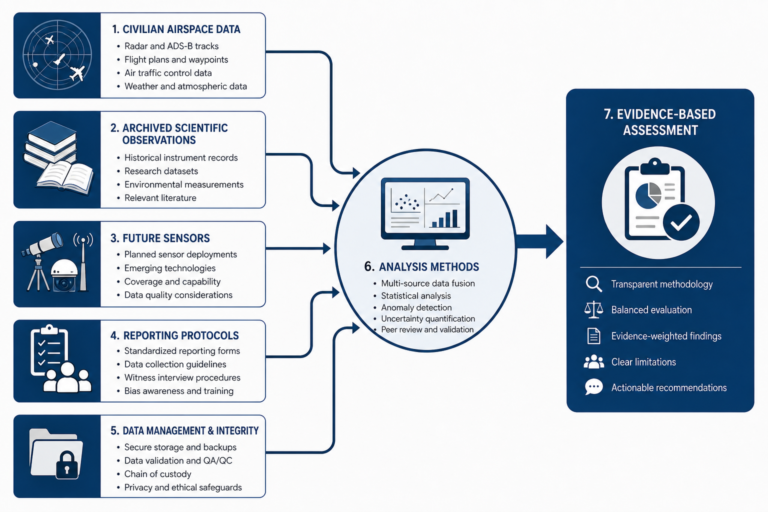
NASA’s 2023 UAP Study Focused on Better Data and Analysis Methods
NASA’s public record shows the independent study examined existing and future data, reporting protocols and civilian-airspace information. The resource page does not assess…