
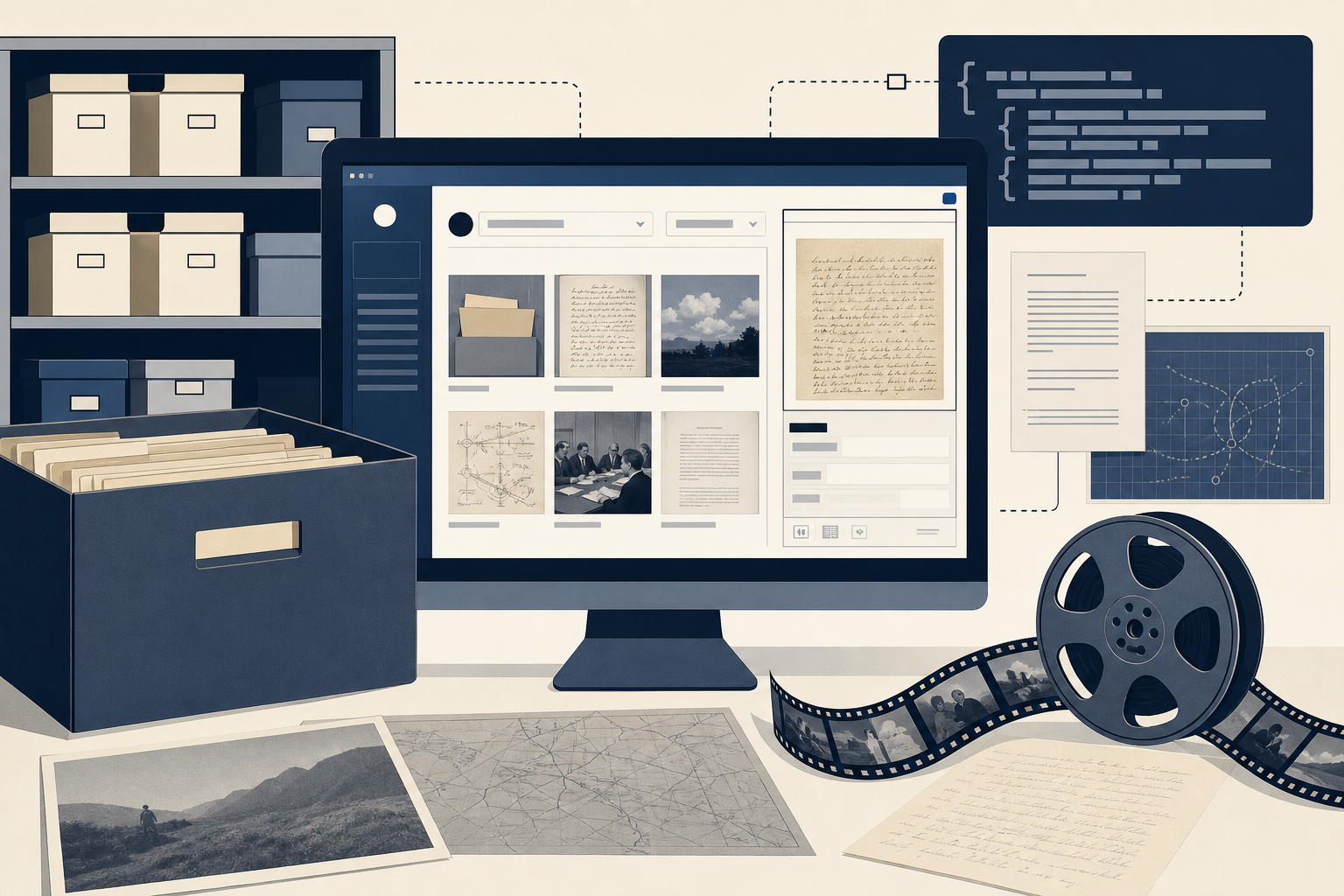
The portal provides ZIP archives and JSON metadata for catalogued agency and historical holdings, though some records remain available only for onsite viewing.
The U.S. National Archives and Records Administration maintains a bulk-download portal for digitized and born-digital records it identifies as related to unidentified anomalous phenomena, or UAPs. It provides ZIP archives of images, video and PDFs alongside JSON metadata exports for catalogued records.
NARA says the packages cover objects on its separate “Records Related to Unidentified Anomalous Phenomena” page that are available in the National Archives Catalog. The agency says it will update them at least three times yearly and may add updates when new catalog material appears.
From current agency files to Project Blue Book
- The portal groups records by format and type. Electronic-record downloads include material from the Nuclear Regulatory Commission, Federal Aviation Administration, Office of the Director of National Intelligence and Office of the Secretary of Defense. The four packages range from 1.29 MB for ODNI material to 103.37 MB for the Defense Secretary’s office; each has a metadata export and ZIP download.
- The largest listed collections are historical: Project Blue Book administrative files from 1947–1969; UFO-sighting case files from June 1947 through December 1969; and a sanitized version of those files. The sanitized collection is split among image and PDF archives, with individual packages generally reaching tens of gigabytes.
- Other textual listings include Air Intelligence Reports from 1948–1953, 4602d Air Intelligence Service Squadron files, Office of Special Investigations UFO-investigation records, Roswell Report source files and Project Bluebook artifacts. They also include a Gemini VII air-to-ground transcript, an Air Force regulation-related UFO file, and catalog units with UFO references in their titles.
- The audiovisual section includes Project Blue Book motion-picture films, moving images and sound recordings tied to “The Roswell Reports” source-data research files, and Maj. Gen. John A. Samford’s recorded statement on “flying saucers.” It also identifies material not online, including some Project Blue Book sound recordings and titles such as “The Case of the Flying Saucer.”
- Still-image listings include a Project “BLUE BOOK” series dated 1954–1966 and broader Air Force photographic series. A Project “BLUE BOOK” photograph archive is listed at 36.48 GB; two wider Air Force collections are listed at 648.47 MB and 8.75 GB.
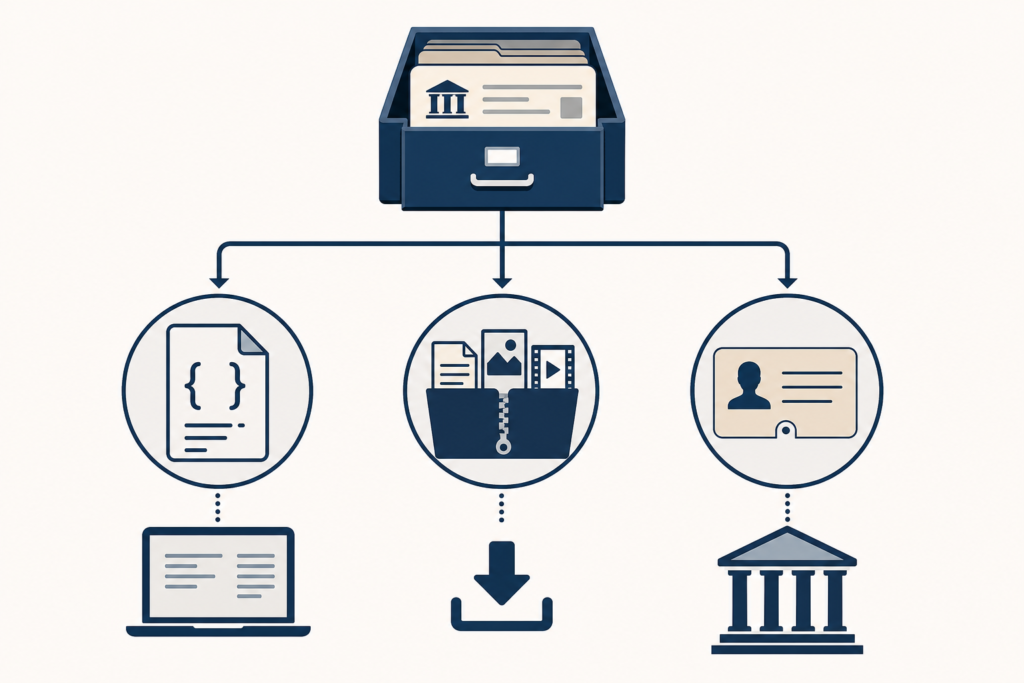
The download list is not the whole archive
The packages do not include every record described by the portal. NARA says material may be unavailable online because of copyright or other intellectual-property restrictions; the site then provides a catalog description rather than a downloadable object. Researchers seeking such audiovisual material are directed to arrange onsite viewing through the Moving Image and Sound Research Room at the National Archives at College Park, Maryland.
The page does not say whether a particular UAP report was resolved, whether a listed agency record is complete, or whether later transfers will add material beyond currently catalogued digital objects. Nor does it make historical “UFO” and contemporary “UAP” references equivalent classifications or conclusions.
Editorial analysis
A research tool, not a case finding
The portal lets researchers download a defined set of digital objects with machine-readable metadata instead of relying only on individual catalog searches. That can help users trace an item to its National Archives Identifier, compare descriptions with available files, sort holdings by date or agency, and spot duplicate entries. NARA says staff assemble packages by drawing identifiers from its UAP-records list, checking relevant series, file units and items, then retrieving object URLs.
Inclusion in a UAP-related collection is not government validation of every statement, sighting or interpretation in a record. The holdings include administrative files, correspondence, media material, scientific discussion and investigative records with different evidentiary weight. A catalog label shows how NARA grouped and described an item; the item, its provenance and related documentation are needed to assess what it establishes.
Starting with the metadata
- For large collections, the JSON metadata file is a sensible starting point because it identifies catalogued records associated with a package. Keep the package date and National Archives Identifier when citing or comparing files, since NARA says downloads can change as catalog holdings are updated.
- The FAA, ODNI and Defense Department packages are distinct from the much larger historical collections. Listings provide an access route and file sizes, but do not describe every file’s substantive contents or establish what any document concludes about an anomalous event.
Sources
Follow the story
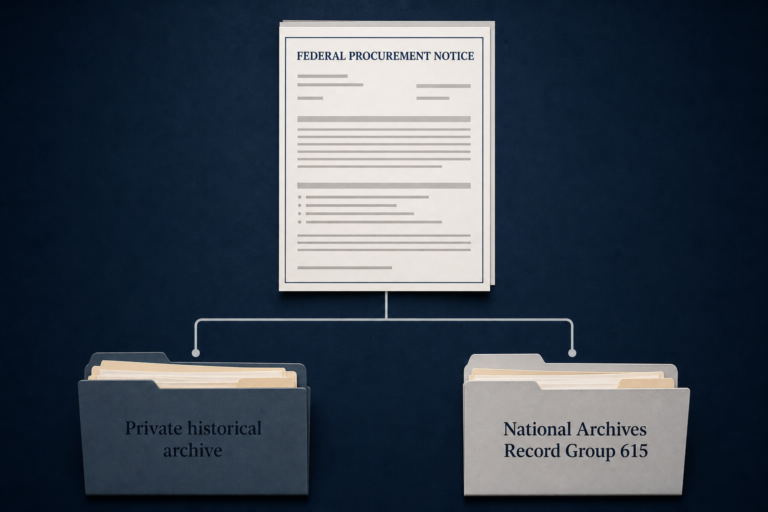
Pentagon Notice Proposes Sole-Source Subscription to Private UAP Archive
Washington Headquarters Services says AARO would receive digital access to proprietary historical data, metadata and analysis from a New Mexico records center; the…
Former Congressional Staffer Details UAP Briefing Claims in Connecticut Testimony
Kirk McConnell’s letter supporting a Connecticut UAP-study bill says senators and staff heard accounts of alleged intelligence collection, crash retrieval and reverse engineering.…
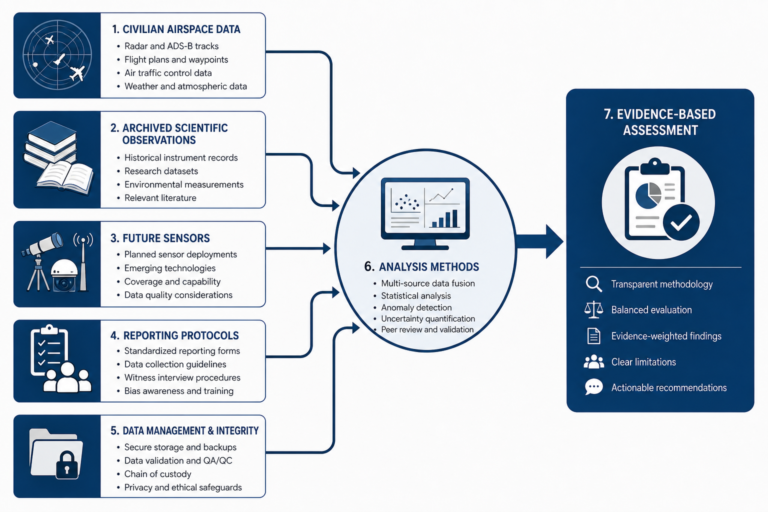
NASA’s 2023 UAP Study Focused on Better Data and Analysis Methods
NASA’s public record shows the independent study examined existing and future data, reporting protocols and civilian-airspace information. The resource page does not assess…