
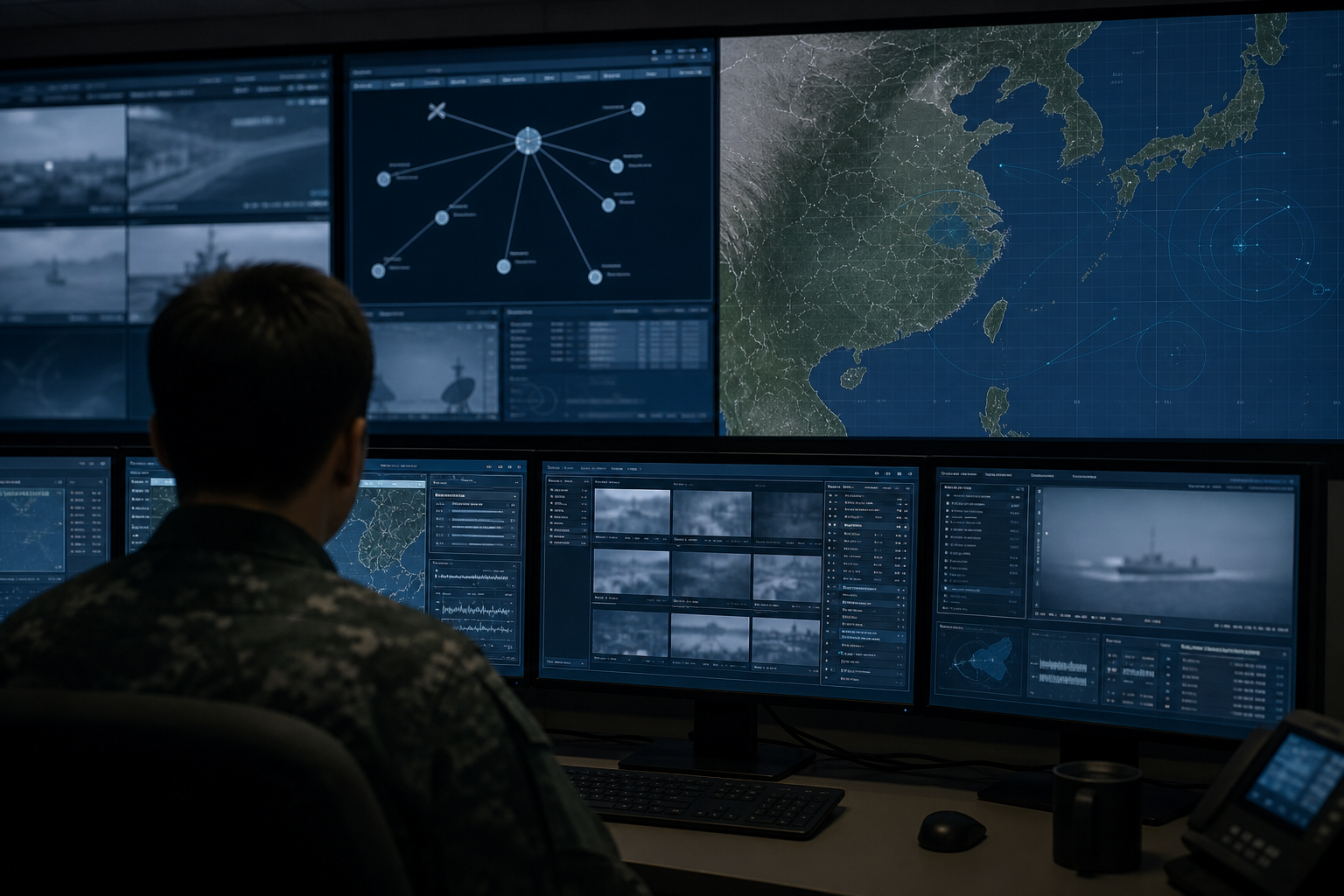
In a Sept. 3 Americans for Safe Aerospace interview, Campbell said he saw several objects while monitoring military video feeds in 2023–24. A 2013 Defense Department roadmap documents a related DISA-proposed video system, but the underlying footage and records are not public.
Kevin Campbell, who says he was a contractor supporting the Defense Information Systems Agency at Hill Air Force Base, has described seeing several unidentified objects on live MQ-9 reconnaissance-video feeds over waters near East Asia. In a recorded interview published September 3 by Americans for Safe Aerospace, Campbell told interviewer Ryan Graves that the sightings occurred during roughly eight months in a network-operations role in 2023–24. He did not release the footage and said he could not identify the objects or determine their origin.
Several episodes, not one encounter
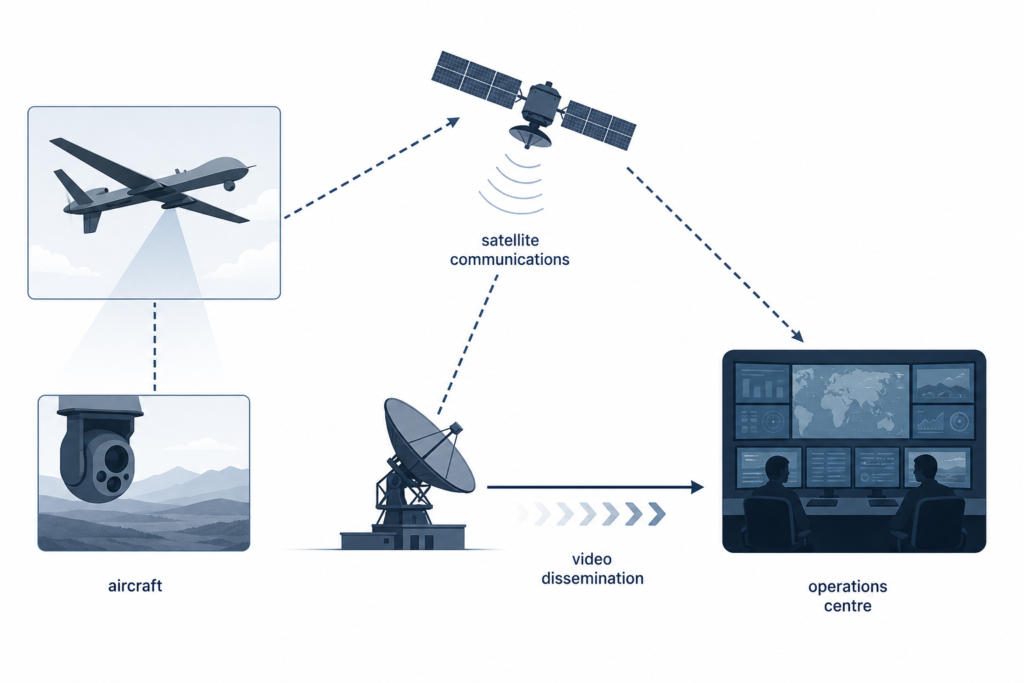
Campbell said his private-sector work involved satellite-communications network engineering in support of DISA, including monitoring network traffic and live reconnaissance video. He said he viewed MQ-9 feeds through a military video-distribution system he called the Unified Video Dissemination System, or UVDS. He also said personnel used a shared drive informally to save clips they regarded as notable.
His account concerned several episodes in the East China Sea and Yellow Sea region rather than a single sighting. In one, Campbell said he saw an approximately spherical object moving just above the water, with no visible wings or apparent propulsion. In another, he described an elongated, rust-coloured object that appeared only briefly in electro-optical imagery. He also recounted a luminous object that he said made a broad turn before the drone lost track of it.
Campbell estimated that some objects might have been between one and three metres in size, while stressing that this was an estimate rather than a measurement. He characterised the incidents as unidentified to him. He did not say they established a particular technology, country of origin or non-human cause.
What the Defense Department document establishes
- A 2013 Defense Department unmanned-systems roadmap documents a DISA-proposed Unified Video Dissemination System architecture. The roadmap says UVDS was designed to distribute full-motion video across satellite-communications networks and replace dedicated point-to-point communications supporting Predator and Reaper operations. It independently documents a video-distribution architecture with the broad function Campbell described.
- The roadmap does not establish that Campbell worked at Hill Air Force Base, accessed a particular feed or encountered the clips he described. Nor does it identify an object observed on any MQ-9 feed during the period he discussed. The document corroborates the system context, not the reported sightings.
The records outside reviewers would need
- The main evidentiary gap is that the underlying video, associated metadata, sensor information and flight records are not available for public review. Without them, outside analysts cannot assess an object’s range, speed, altitude, size, sensor mode, possible image artefacts, or relationship to weather and other traffic. Campbell’s interview is direct testimony about what he says he saw; it is not independent verification of those observations.
- No public document accompanying the interview independently confirms Campbell’s stated employment history, the specific 2023–24 feed sessions, the shared-drive clips or the objects he described. The public record establishes that he gave this account. It does not resolve the identity of the objects.
His account of reporting the sightings
Campbell said he did not see a formal UAP reporting route in his workplace when the sightings occurred. He said he later contacted Americans for Safe Aerospace, spoke with the FBI and tried to find an appropriate government channel for his account. The interview does not establish whether he filed a report through an official process.
The All-domain Anomaly Resolution Office says its current reporting page allows current or former U.S. government employees, service members and contractor personnel with direct knowledge of government UAP programmes or activities to submit an initial report without putting sensitive or classified information in the form. AARO separately directs current operational reports from military and Defense Department civilian personnel through command or service channels. Its current page does not show which process was available in Campbell’s workplace during 2023–24.
Editorial analysis
What can and cannot be inferred
The interview places a claimed firsthand observation within a historically documented military-video dissemination setting. That is useful context, particularly because Campbell identifies a function for the system he says he used. It does not bridge the central gap between the existence of the architecture and evidence that the reported sightings occurred on a particular feed.
A technical assessment of the objects would require more than a fuller verbal description. Original video files, timestamps, aircraft and sensor data, location information, relevant logs, and testimony from others who accessed the same material could allow independent corroboration while avoiding disclosure of protected operational details. The interview does not say the footage will be released, and no public video accompanies Campbell’s account.
What could clarify the account
- Further records from relevant agencies or contractors, or accounts from additional witnesses with direct access to the same feeds, could clarify whether the episodes can be corroborated and technically evaluated. Until such material emerges, Campbell’s testimony remains an attributed account of unidentified imagery, and the objects’ identities remain unresolved.
Sources
Follow the story

Jennice Vilhauer Says ODNI Meeting Covered Plan for Possible NHI Confirmation
In a September 3 post, the UAP Science Advisory Council member described preparedness planning discussed at an August 31 meeting; no plan or…
Former Congressional Staffer Details UAP Briefing Claims in Connecticut Testimony
Kirk McConnell’s letter supporting a Connecticut UAP-study bill says senators and staff heard accounts of alleged intelligence collection, crash retrieval and reverse engineering.…
Post Links Grusch and Elizondo to Roswell-Era Crash Retrieval Claims
Its proposed 70-year narrative relies on purported MJ-12 files, Corso’s accounts and retrospective testimony; the material provides no authenticated records establishing a single…