
In a 4 September episode of That UFO Podcast, the religious-studies professor said a presidential confirmation of non-human intelligence might lead people to consider meaning and existence; her remarks were not an official disclosure announcement.
Religious-studies professor Diana Pasulka has said disclosure of UFO-related information need not traumatise the public, arguing it could instead prompt questions about meaning, religion and human existence. International Business Times UK reported the comments from a 4 September episode of That UFO Podcast.
The remarks address a recurring disclosure-debate proposition: that authorities may fear a destabilising reaction if alleged non-human intelligence were confirmed.
Pasulka’s conditional case
Pasulka told host Andy McGrillen that disclosure was “not necessarily disturbing,” according to IBTimes UK’s account. “It’s disturbing if you’ve never thought about these things before, but it’s not disturbing for those who give it some thought,” she said, as quoted by the publication.
Her argument concerned an imagined scenario in which a sitting president confirmed non-human intelligence; she was not describing an announcement that had occurred or presenting evidence that one was approaching. In that scenario, she said, initial shock might lead people to broader questions about existence and meaning, which she characterised as “probably good.”

The perspective behind the remarks
IBTimes UK identifies Pasulka as a University of North Carolina Wilmington professor whose research has examined scientists, technologists and others interested in extraterrestrial intelligence. The report says that work informed her 2019 book, American Cosmic.
It also says her later book, The Others, UFOs, AI, and the Secret Forces Guiding Human Destiny, was published on 28 July 2026. Her comments reflect scholarly interests in religion, experience and anomalous claims, not a government assessment of public readiness for disclosure.
What the report does and does not establish
- IBTimes UK identifies no disclosure date, planned presidential statement or document indicating an imminent announcement on non-human intelligence.
- It provides no independent evidence establishing non-human intelligence. The podcast episode was unavailable for direct review, so this account rests on the publication’s reporting and quotations rather than a recording or transcript.
- The publication notes that U.S. authorities have released UAP-related reports, imagery and records and that congressional calls for transparency continue. Those developments are separate from the presidential confirmation Pasulka imagined.
Editorial analysis
A debate about reaction, not disclosure
Pasulka challenges a proposed rationale for secrecy: that the public could not absorb a profound revelation. That differs from questions of what governments possess, know or intend to release, and whether the underlying claim has been verified.
The news is her view of disclosure’s possible social consequences, not a disclosure development itself.
Sources
Follow the story
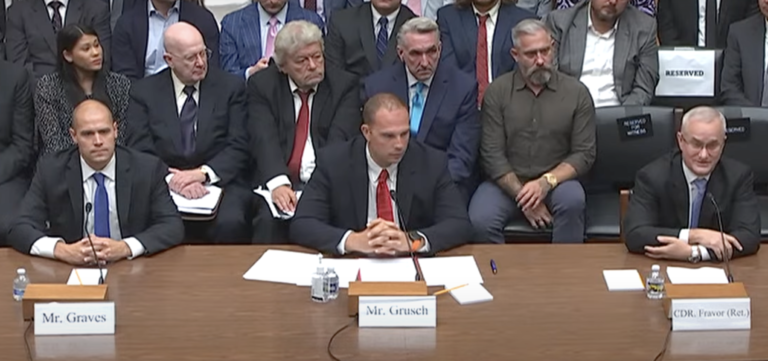
Grusch offers Trump an ‘A-team’ to track down alleged UAP holdings
In an August interview now being recirculated, he described the people he could call, the facilities he would pursue and the risk of…

New ‘Leak Network’ account examines the private messages behind UFO credibility battles
Courtney Marchesani’s new article follows information circulating around Jason Sands and his critics. Sara Bond says the material draws on two and a…
Burchett says Stephen Miller has assigned staff to UAP disclosure
The congressman describes White House cooperation, while keeping his expectations for a major announcement in check.