
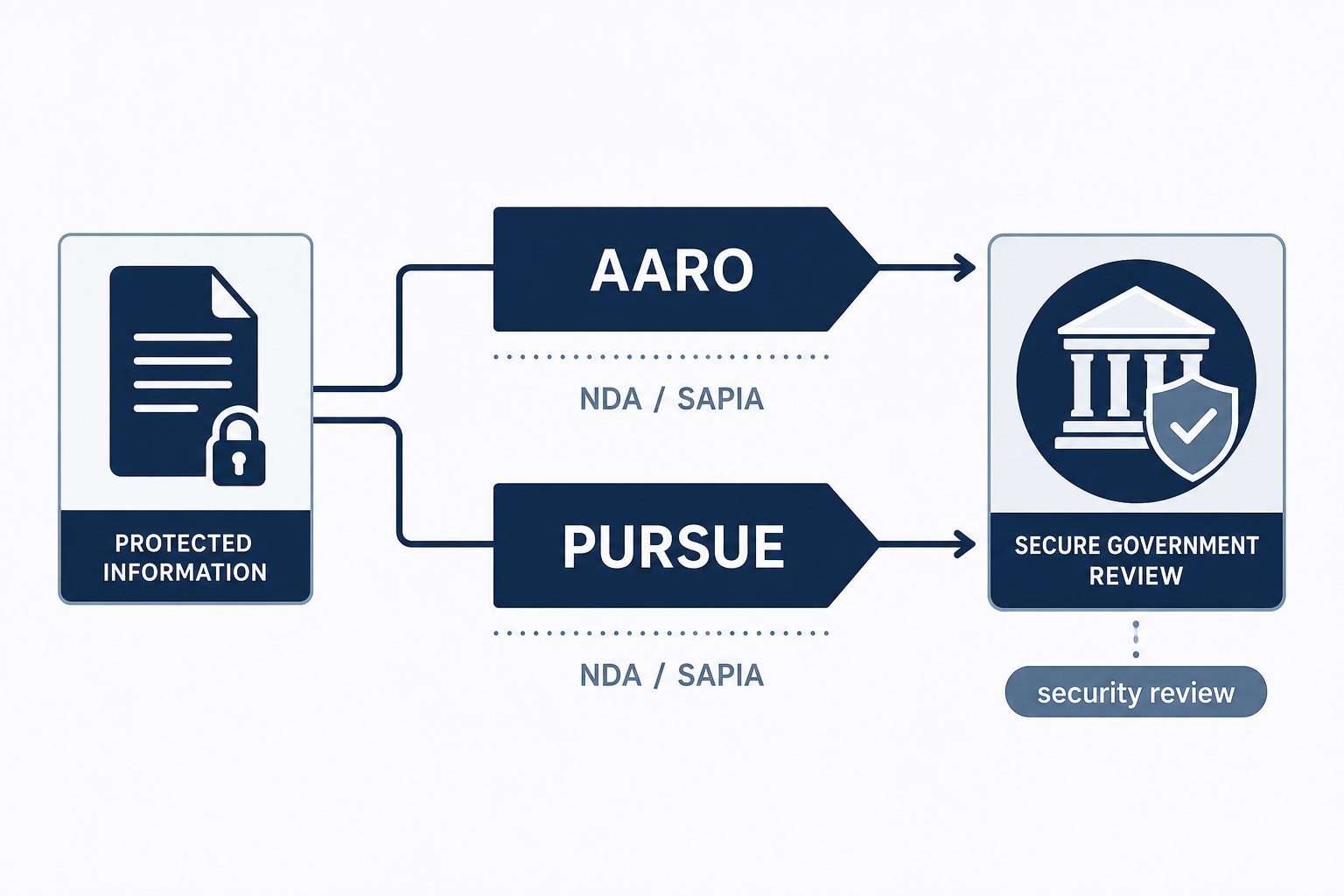
The reported channel would let current and former personnel submit protected UAP-related information to designated government officials, while earlier law and AARO guidance provided a similar route; the full waiver and implementation guidance remain unpublished, leaving its legal reach unresolved.
The Black Vault reported September 14 that the Department of War issued a targeted waiver allowing current and former service members, civilian personnel and contractors to provide UAP-related National Defense Information to representatives of the government’s PURSUE effort. The language reproduced by the archive describes a legally protected channel to designated officials, not permission to release protected material publicly.
The Black Vault cites earlier law and AARO guidance authorizing UAP-related disclosures, notwithstanding nondisclosure agreements, to an office created to receive and assess such reports.
What the reported PURSUE waiver says
- According to Department language reproduced by The Black Vault, the waiver applies to people who hold or previously held access to UAP-related National Defense Information. It says disclosures to PURSUE supersede civil and administrative enforcement provisions in previously executed NDAs and SAPIAs, but “strictly” for communications directed to the PURSUE team.
- The same account says submissions would receive systematic review, security evaluation and possible declassification; it does not authorize participants to give classified material to journalists or publish it independently.
- The report identifies neither people deterred by legal liability, clearance loss or administrative penalties nor cases in which agreements blocked information from reaching PURSUE. The directive, its precise coverage and implementation have not been publicly released, leaving its practical reach unclear.
The earlier AARO disclosure route
- Section 1673 of the James M. Inhofe National Defense Authorization Act for Fiscal Year 2023 gave the All-domain Anomaly Resolution Office authority to receive UAP-related information regardless of classification and notwithstanding nondisclosure agreements, according to The Black Vault. AARO guidance quoted by the archive says an authorized disclosure is not subject to an NDA entered by the person making it, and that AARO may receive information under restrictive controls, including Special Access Programs and compartmented access programs.
- FOIA records cited by The Black Vault describe AARO’s unsuccessful effort to interview former intelligence official David Grusch in 2023. In a November 19, 2023 communication, AARO told Grusch it could receive UAP information regardless of classification and notwithstanding any NDA he had signed, and offered a meeting in a Sensitive Compartmented Information Facility. A related memorandum said people with current or former access to UAP-related or presumed relevant information covered by a U.S. government NDA could provide it to AARO representatives for the office’s assigned mission.
- The archive also reports that a 2025 Department of Defense release included AARO’s verbal legal advisement for witnesses. It said information disclosed solely for an oral-history discussion in the SCIF was not subject to an NDA, while all NDAs remained in force after the interview.
The unresolved question: collateral classified material
Grusch’s documented objection to the proposed AARO interview, as recounted in the FOIA material, went beyond NDAs. He wrote that describing UAP-related activities could expose conventional classified and compartmented mission areas governed by separate security-classification guides, and sought further assurances. AARO maintained it had statutory authority to receive UAP-related information; Grusch did not attend the meeting planned for November 14, 2023.
But without the full waiver or implementing guidance, a definitive legal comparison is not possible, including whether PURSUE covers UAP-related information that cannot be explained without revealing collateral material classified for unrelated reasons.
The Black Vault says it asked the Department of War for the directive or waiver, implementation instructions, legal advisements and participant procedures.
Editorial analysis
Editorial analysis
The question is how far that channel extends.
PURSUE could still mark a meaningful change if its express treatment of Special Access Program Indoctrination Agreements, or SAPIAs, reaches circumstances earlier procedures did not clearly address.
The reported waiver is therefore a route to government recipients, not a general release from security obligations.
That was a bounded authorization to speak to authorized officials, similar in structure to the reported PURSUE arrangement.
The reported PURSUE language more explicitly names both NDAs and SAPIAs than some public AARO descriptions.
Those documents could establish whether PURSUE is chiefly a new destination for disclosures, a broader legal protection, or both.
Sources
Follow the story

NSA Releases Eight Historical Technology Forecasts After 15-Year FOIA Wait
The records, produced from 2002 to 2010, cover privacy, terahertz systems, energy harvesting, antennas and post-silicon computing; one 228-page study remains withheld.
Tim Gallaudet Says AARO Meeting Was an “Influence Operation”
The retired Navy rear admiral described a two-and-a-half-hour exchange, alleged officials tried to change his UAP views and renewed his call for the…
NSA FOIA Release Adds 1978 Memo on PROMIS Listings for CIA
Found in a 2026 file review, the redacted memorandum records a request attributed to CIA/COMP for recurring listings from NSA’s intelligence-product database; it…