
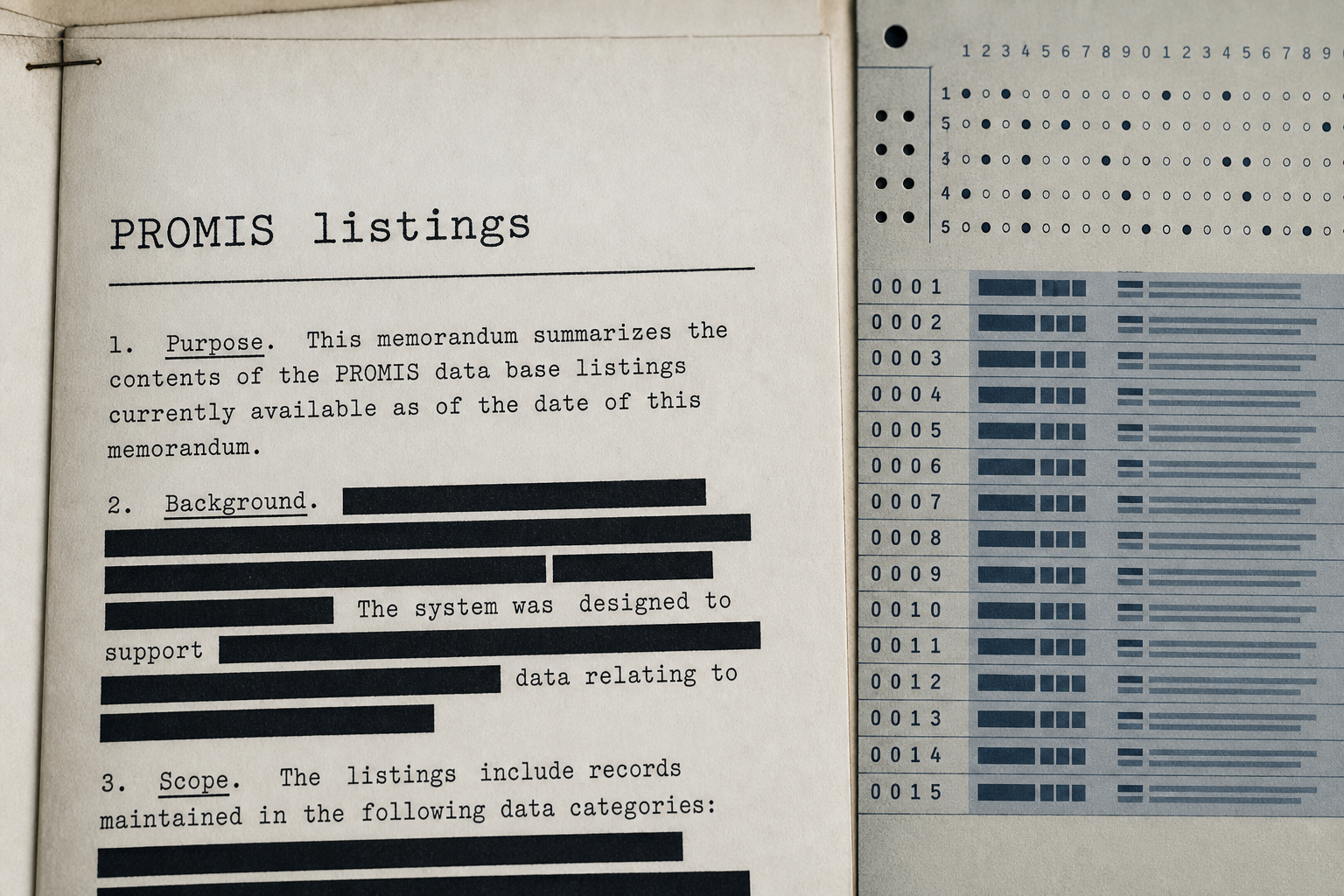
Found in a 2026 file review, the redacted memorandum records a request attributed to CIA/COMP for recurring listings from NSA’s intelligence-product database; it concerns a different PROMIS from the INSLAW software controversy.
A newly released 1978 National Security Agency memorandum records discussions about providing regular PROMIS listings to CIA personnel, adding a late-found document to a Freedom of Information Act case filed in 2013. NSA sent the response to The Black Vault on April 29, 2026, saying a file review had located one document omitted from its earlier final response. The agency released it with redactions and again described its response as final.
The record concerns an NSA database for managing intelligence-report information, not the better-known PROMIS software associated with INSLAW Inc. and the Justice Department.
The memorandum NSA found eight years later
- The Black Vault requested NSA records on the agency’s use of a computer program called PROMIS on November 14, 2013, citing Justice Department material referring to an NSA-developed database of the same name.
- NSA said its 2026 review found a previously unreleased February 8, 1978 document headed “Regular PROMIS Listings for CIA.” As reproduced by The Black Vault, it says a person identified as with CIA/COMP requested quarterly PROMIS listings for certain sites. NSA had provided information once the previous August, and the memo considers establishing a recurring distribution.
- The memo indicates that NSA was already providing monthly listings to another redacted recipient and that another party knew of the arrangement. Redactions conceal the sites, identities and part of the operational context, leaving unclear what information was requested, which sites were involved and whether recurring CIA distribution went ahead.
What NSA’s PROMIS was built to do
In NSA usage, PROMIS meant Product Management Information System, a 1970s database organised around the agency’s intelligence “products.” The Justice Department’s Prosecutor’s Management Information System, associated with INSLAW, was a separate case-management system.
A draft Justice Department report included in the NSA release describes the NSA system as an application of the M204 database-management system, rather than a software program. It recounts NSA personnel telling investigators that the database contained abstracts of intelligence reports from across the agency.
Surviving NSA memoranda trace development to early 1974. A January 15 memorandum, “SIGINT Management Data Bases,” described statistics assembled separately by production groups and called for a system cutting across those lines. A January 21 memo discussed an online system to provide product-related data to the Deputy Director for Operations level and outside NSA, while limiting sensitive material to those with a need for it.
A February 12 memorandum called the older Offline Coversheet Processing system costly and inadequate, estimating manual conversion at about 500 man-hours a quarter, output delays of roughly two weeks and errors of seven to eight percent. By May 1974, a memo on content and timeliness requirements used the PROMIS name and discussed which signals-intelligence products to include and how current the data should be.
Why the INSLAW controversy is separate
According to The Black Vault’s account of Justice Department material in the release, the department concluded in 1994 that it had found no credible evidence that INSLAW’s PROMIS was improperly distributed elsewhere in the federal government or to foreign governments. A later Court of Federal Claims proceeding rejected INSLAW’s claims.
A “final” response that produced another record
According to The Black Vault, NSA located potentially responsive material by 2016 and sought $440 in processing fees. Though the fee was not paid, NSA issued a partial release on October 4, 2018, then a larger 85-page release on October 22 that it described as final.
The 2026 letter adds the February 1978 memorandum after a later file review. NSA cited FOIA exemptions and statutory protections, saying CIA had requested protection for CIA information. Whether further responsive material could still be found is unknown, despite the agency again calling the response final.
Editorial analysis
What the late release adds
The memorandum adds a primary record that NSA’s PROMIS output was considered for recurring distribution beyond the agency, including in discussion with CIA personnel. It supplies a dated account absent from the 2018 release while maintaining the distinction, stated in Justice Department material, between NSA’s database and INSLAW’s software.
The later find shows how an archival release can change after an agency has characterised a case as complete. Its operational details remain redacted, but the 1978 memorandum is now part of the public record.
Editorial analysis
Editorial analysis
The shared acronym has linked two separate systems in accounts of the subject.
Together, the records describe a management and retrieval system for intelligence-product information, with searchable records, reporting requirements and security controls.
They do not describe a stand-alone mass-surveillance software package.
The distinction matters because allegations about INSLAW’s PROMIS software produced a prolonged political and legal controversy.
The NSA documents establish that the agency maintained a database also called PROMIS and that its output was discussed with CIA personnel; they do not make the two systems the same.
Sources
Follow the story

NSA Releases Eight Historical Technology Forecasts After 15-Year FOIA Wait
The records, produced from 2002 to 2010, cover privacy, terahertz systems, energy harvesting, antennas and post-silicon computing; one 228-page study remains withheld.

Tim Gallaudet Says AARO Meeting Was an “Influence Operation”
The retired Navy rear admiral described a two-and-a-half-hour exchange, alleged officials tried to change his UAP views and renewed his call for the…
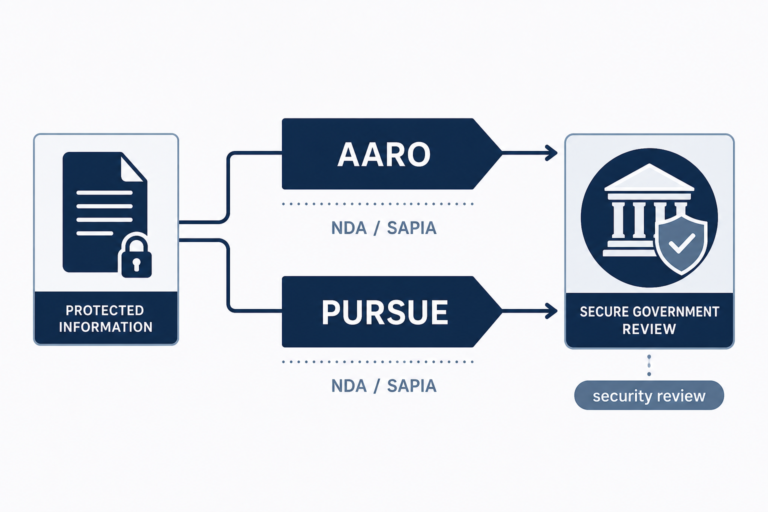
Black Vault Reports Department of War UAP Waiver for PURSUE
The reported channel would let current and former personnel submit protected UAP-related information to designated government officials, while earlier law and AARO guidance…