
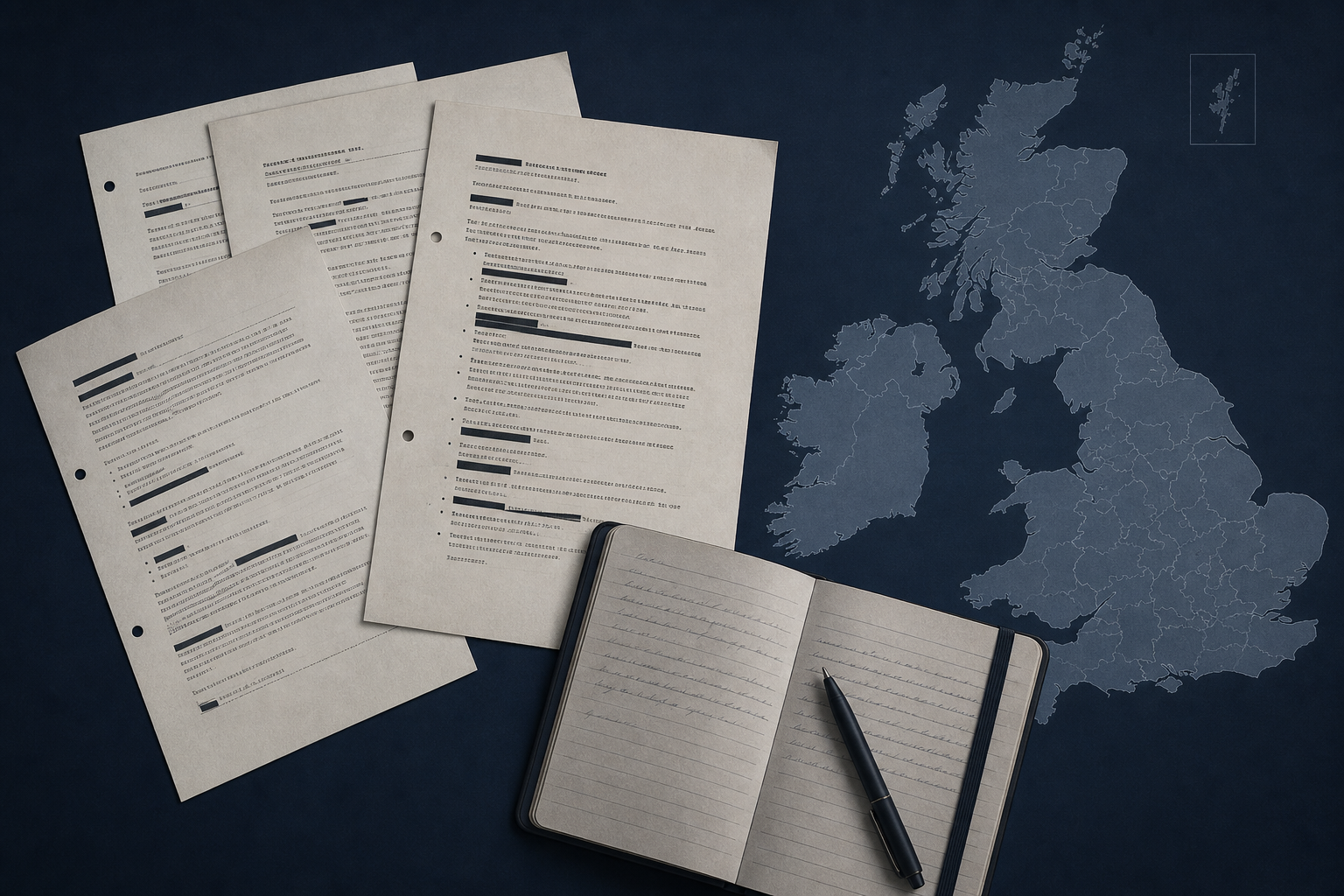
The West Midlands Police inspector says he selected 75 accounts for his book, drawn from a collection he has built since at least 2022; the public material does not independently verify each case.
Roy Teague, a serving West Midlands Police inspector, says roughly 250 current and former British police officers have shared accounts of UFOs, UAPs, unusual lights and other anomalous incidents with him. In a September 2026 interview with NewsNation’s Ross Coulthart, Teague said he selected 75 accounts for his newly published book, Close Encounters of the Police Kind.
The inspector’s status does not settle the cause of any sighting. It does attach a named serving officer, a professional context and a sustained collection effort to testimony that, Teague says, many witnesses had been reluctant to discuss publicly.
The project predates the book interviews
Teague identified himself in the NewsNation interview as a tactical firearms commander and former British Army serviceman, as well as a West Midlands Police inspector. He said he began gathering British police reports systematically after researching the subject, then invited serving and former officers to come forward.
A February–March 2022 article in the West Midlands Police Federation magazine documented both Teague’s police role and his work collecting UK police reports dating to the 1940s. That article places the project several years before the interviews promoting the book.
It also records Teague’s interest in the PRUFOS database assembled by retired British Transport Police detective constable Gary Heseltine, which then held more than 100 police reports. That history indicates an established reporting network and collection project, rather than a body of material assembled only for the current release.
The accounts span sightings and police encounters
- Teague’s archive is described as a collection of incidents officers say they encountered or investigated, not a single class of event with a shared explanation. The description accompanying an interview on Pursuit of the Paranormal characterises the material as reports of UFOs, UAPs, unusual lights and other unexplained police cases.
- NewsNation discussed one report dated 5 July 1997 involving police constable Paul Hammond and Army warrant officer David Frampton. According to the interview’s account, the two men described a large, dart-like object while operating from a helicopter in restricted airspace. The programme presented the episode as a witness report relayed through Teague’s work; it did not independently establish the object’s nature or origin.
- That example shows the operational settings Teague says the book preserves. It does not resolve the 1997 event, and it cannot stand in for an assessment of the wider collection.
What police testimony can establish
An officer’s account may contain details useful to later scrutiny: a location, time, radio traffic, response, or other witnesses. Professional experience alone, however, does not identify an object, exclude ordinary causes or establish an extraordinary explanation.
The interviews and Federation article describe Teague’s collection and selected narratives. They do not provide the underlying case files, corroborating sensor records or a common investigative standard for all 75 published accounts. The material is therefore a body of testimony and prior reporting, not a controlled dataset that independently verifies each observation.
A record of reluctance to report
Teague’s central public argument is that officers who experienced unusual events often stayed silent because they expected professional or social ridicule. His stated total suggests a collection larger than a handful of isolated stories, though the figure remains his account of the responses he received.
The 2022 Federation article supports the narrower conclusion that police-focused UFO reporting had become a sustained project. It also notes Teague’s strong personal views about the phenomenon, a reason to distinguish his role as collector and advocate from that of an independent adjudicator.
Editorial analysis
Assessment: the test is the paperwork behind each case
A collection of police testimony can have historical and investigative value even when individual incidents remain unresolved. Its strongest use would be to direct case-by-case examination, rather than to supply a single answer for incidents gathered across different decades, locations and circumstances.
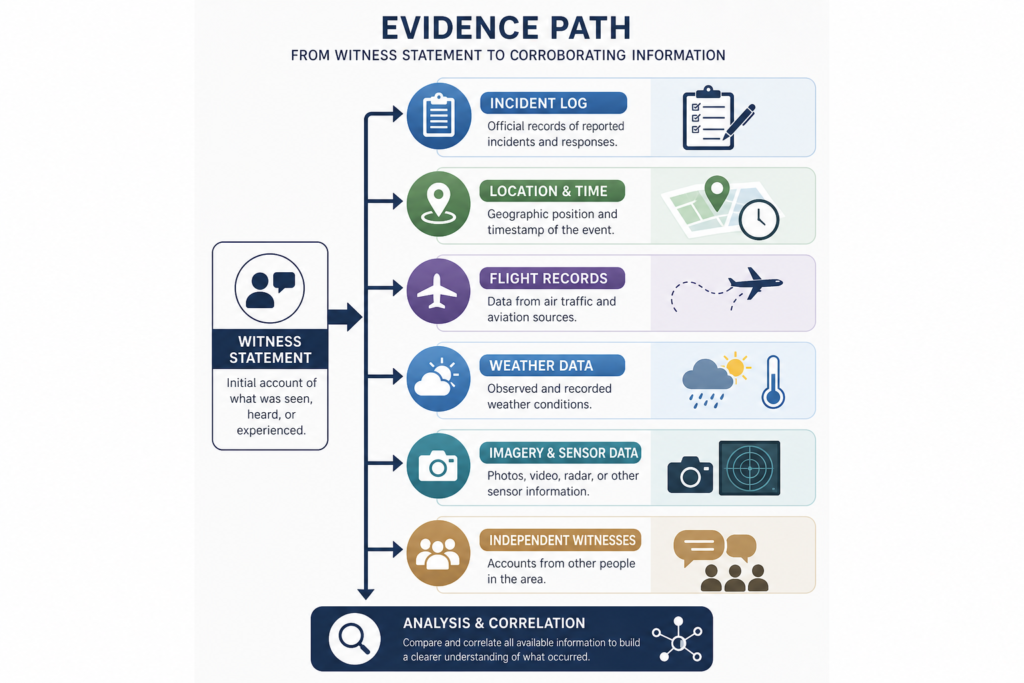
The useful next step is access to contemporaneous notes and incident logs, alongside flight records where relevant, weather information, photographs or video, and accounts from independent witnesses. Such documentation could distinguish a well-recorded unexplained observation from a demonstrated conclusion about what was observed.
Teague has documented a long-running effort to gather accounts. The public material reviewed here does not establish one explanation across the collection.
Questions still open
- The published interviews and Federation article do not establish how Teague verifies a contributor’s identity, whether each report has a contemporaneous official record, or how he selected the 75 accounts for publication.
- They do not include a full public index of the roughly 250 reported contributors, the complete underlying accounts or a uniform explanation for the incidents. Those absences do not erase the testimony; they set the limit on what can presently be concluded from it.
Sources
Follow the story
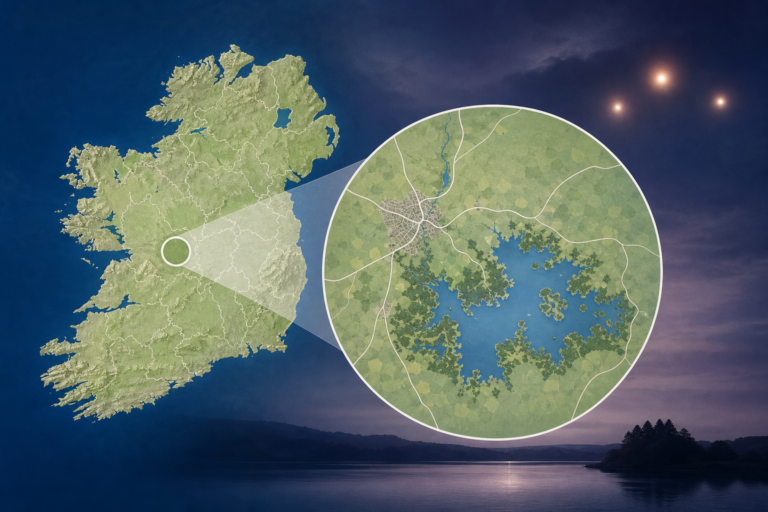
Roscommon Herald Reports RTÉ Documentary on Boyle Lights and Lough Key Experiment
The reported film follows astronomer Dr Eamonn Ansbro’s inquiry into local accounts and a planned public test; RTÉ has not announced a broadcast…
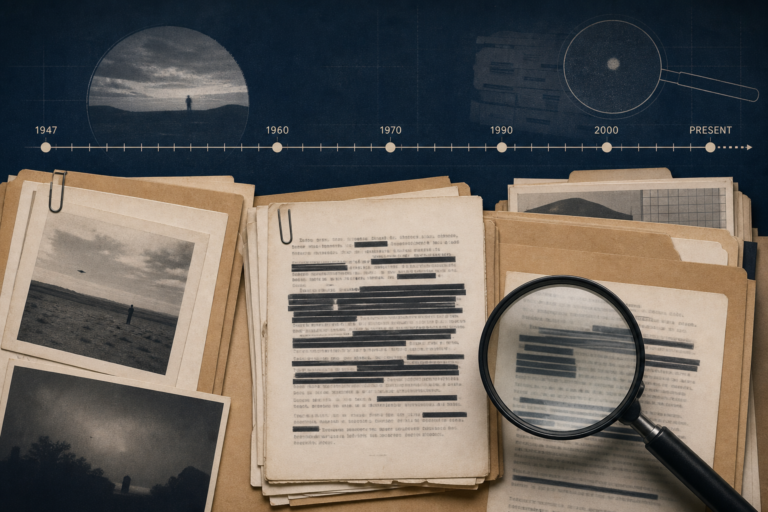
Post Links Grusch and Elizondo to Roswell-Era Crash Retrieval Claims
Its proposed 70-year narrative relies on purported MJ-12 files, Corso’s accounts and retrospective testimony; the material provides no authenticated records establishing a single…
Kevin Campbell Describes Unidentified Objects on MQ-9 Feeds Over East Asia
In a Sept. 3 Americans for Safe Aerospace interview, Campbell said he saw several objects while monitoring military video feeds in 2023–24. A…