

The updated government archive gives readers direct access to official footage and case summaries spanning the Middle East, Europe and other regions. The releases include unresolved reports and incidents with ordinary candidate explanations, but not the native sensor data needed for a full independent analysis.
The Story
The All-domain Anomaly Resolution Office has expanded its public UAP library from a bare index into a more useful collection of linked military videos and report entries.
A large group of records dated May 8, 2026 includes mission reports, range-fouler debriefs, tearline documents, briefings and historical files. Later additions published in July and August link directly to video pages hosted by the Defense Visual Information Distribution Service, where readers can inspect the released footage and AARO’s descriptions.
The collection matters because it shows the range of material entering the Pentagon’s UAP system. It also shows why the label “UAP” cannot be treated as a conclusion. Some entries remain unresolved; others carry candidate explanations such as a Russian military aircraft, a possible missile or a reflection from an object in the water.
What We Know
AARO’s official UAP Report Documents page was live and accessible on August 28. It lists incidents reported by U.S. Central Command, Northern Command, Indo-Pacific Command, the Air Force and other defence organisations.
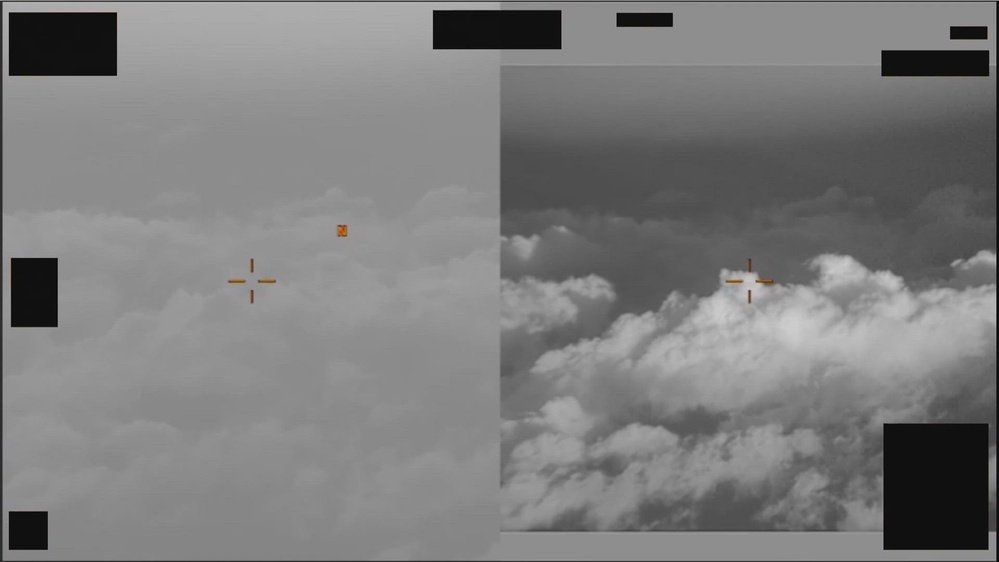
Among the May releases, DOW-UAP-PR28 concerns one minute and five seconds of multi-sensor footage recorded in Greece in January 2024. Its accompanying report described a “diamond-shaped” object moving at about 434 knots and said it was detectable in short-wave infrared. The public video page does not establish what produced the image.
DOW-UAP-PR29 concerns 21 seconds of infrared footage associated with a June 2024 report from the United Arab Emirates. AARO says the observer described an object with a vertical pole or bar beneath it, while also reporting that it might have been a reflection from something in the water.
DOW-UAP-PR21 shows two areas of contrast in ten seconds of infrared footage from 2022. Its accompanying mission report described the observation as a “probable SU-27/35,” referring to Russian military aircraft types.
Those three examples sit inside a much larger archive. The document table includes incidents dated from the 1990s to 2026, with some rows missing a public location or incident date.
What Is Being Claimed
The case pages reproduce descriptions submitted to or prepared by AARO. They identify the reporting command, the recording system, the clip duration and selected observations from accompanying mission reports.
For PR28, the reported speed and “diamond-shaped” description come from the mission report rather than an independent measurement presented on the public page. For PR29, the unusual shape and the possible water-reflection explanation are both part of the released account.
AARO repeatedly warns that its video descriptions are informational. The wording is not an analytical judgment or a factual determination about an event’s validity, nature or significance.
The Evidence
The evidence readers can inspect consists of AARO’s official index, the linked DVIDS video pages and the footage published there. These are primary government release points, not reposts or summaries.
The DVIDS pages provide dates, locations where releasable, video identifiers, runtimes and AARO-supplied narrative descriptions. That is a substantial improvement over reporting from an index alone.
It is still a limited public record. The pages do not provide the complete native sensor files, platform telemetry, target range, full metadata, radar tracks, weather data or every supporting document needed to reconstruct the incidents.
- AARO UAP Report Documents All-domain Anomaly Resolution Office
- DOW-UAP-PR28 — Greece, January 2024 DVIDS / AARO
- DOW-UAP-PR29 — United Arab Emirates, June 2024 DVIDS / AARO
- DOW-UAP-PR21 — Iraq, May 2022 DVIDS / AARO

What We Don’t Know
The public pages do not show how every reported speed, distance or size was calculated. They also do not expose enough platform and sensor information to distinguish a physical target from optical, display or processing effects in every case.
For many entries, it remains unclear whether AARO has completed its analysis, whether more material is withheld, or whether a resolution appears in another document.
The May document list names dozens of files, but the public interface does not make the full analytical chain equally easy to follow for every row. Redactions and missing context may prevent firm conclusions even where a report can be opened.
Why This Matters
Public scrutiny improves when a government office links to the material behind its summaries. Researchers can compare AARO’s wording with the footage, identify which cases contain a proposed explanation and focus requests on the data that is still missing.
The archive also offers a more accurate picture of disclosure. Releasing a UAP video does not mean the government has documented extraordinary technology. It means a report entered the system and that at least part of the record is now available for examination.
Editorial analysis
Our Analysis
The most useful development is access, not spectacle. AARO has placed official case material where the public can inspect it, and several entries preserve both the initial anomaly and a possible ordinary explanation.
That combination should make the archive harder to misuse. The unresolved cases deserve attention, while entries such as PR21 show that the collection also contains reports compatible with known aircraft. The next meaningful step would be a consistent case page linking each public clip to its full mission report, analytical status and downloadable native data where classification permits.
Alternative Explanations
- Aircraft or missiles — Some released reports name these directly as candidate identifications, including the probable SU-27/35 assessment associated with PR21.
- Reflection or sensor effects — PR29 includes a possible reflection from an object in the water. Other cases may be affected by display mode, contrast, compression or missing range information.
- Insufficient data — Several videos remain genuinely difficult to assess because the short clips lack the surrounding sensor and operational record.
Primary Sources
- AARO — UAP Report Documents
Official index and case descriptions · checked August 28, 2026 - DVIDS — DOW-UAP-PR28
Official video release and AARO description - DVIDS — DOW-UAP-PR29
Official video release and AARO description - DVIDS — DOW-UAP-PR21
Official video release and AARO description
Related coverage
Follow the story

NSA Releases Eight Historical Technology Forecasts After 15-Year FOIA Wait
The records, produced from 2002 to 2010, cover privacy, terahertz systems, energy harvesting, antennas and post-silicon computing; one 228-page study remains withheld.

Tim Gallaudet Says AARO Meeting Was an “Influence Operation”
The retired Navy rear admiral described a two-and-a-half-hour exchange, alleged officials tried to change his UAP views and renewed his call for the…
NSA FOIA Release Adds 1978 Memo on PROMIS Listings for CIA
Found in a 2026 file review, the redacted memorandum records a request attributed to CIA/COMP for recurring listings from NSA’s intelligence-product database; it…