
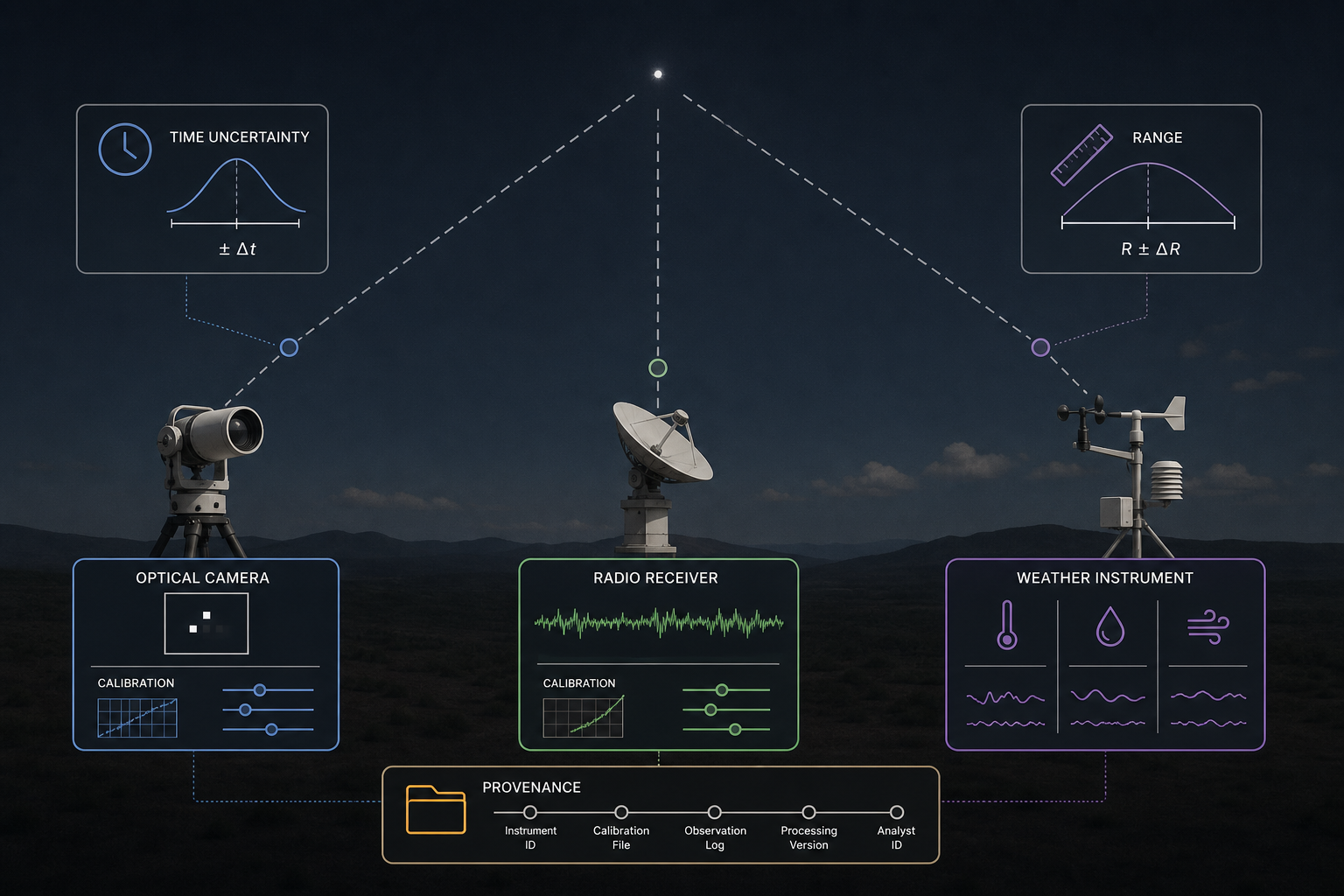
In a September 11 Eurasia Review essay, he proposes recording time, range, calibration and raw-data histories for future observations. The proposal is a policy argument, not a new official finding.
A Eurasia Review analysis published September 11 argues that the next stage of UAP disclosure should focus on measuring and documenting future events, rather than releasing more government records alone.
Author Burak Oktenli writes that declassification can show what was reported and how an agency assessed it, but cannot supply distance, synchronised timestamps or sensor calibration missing from the original observation. The essay is his argument, not an announcement from AARO or NASA.
The AARO figures cited in the essay
- Oktenli cites AARO’s latest annual report, writing that the office received 319 reports, resolved 114, placed 191 in an active archive pending corroborating data and sent nine for specialist analysis.
- According to the essay, weak, late or uncalibrated sensor information remains an obstacle to resolving cases. Oktenli treats “unresolved” as a description of available evidence, not proof of an unusual class of object.
- He also writes that AARO resolved 238 cases through three-dimensional modelling as satellite flaring: sunlight reflecting from satellite surfaces.
What he would require from a report
- Oktenli’s proposed minimum evidence record includes observation time and clock uncertainty; sensor position and orientation; calibration status; whether range was measured or assumed; and raw data with its processing history.
- It would also record environmental conditions, sensor-health limits, software and model versions, and whether a second observation was independent rather than a repeat of the same instrumental error.
- Multiple cameras alone, he argues, are insufficient when instruments can share timing faults, calibration errors, software defects or an environmental confounder. He instead favours heterogeneous corroboration: instruments testing the same event through different physical mechanisms.
What remains to be checked
This review is based on one published analysis. The AARO report, NASA guidance, NIST research and Galileo Project material cited by Oktenli were not recovered alongside it, so its figures, characterisations and technical comparisons require direct review of those documents.
The article also outlines Q-PAMO, which Oktenli describes as a research architecture he is developing, rather than a deployed observatory or validated operational standard.
Editorial analysis
Disclosure and observability are different tasks
The essay separates transparency from observability. Archives can clarify institutional history; calibrated measurements are needed to test claims about an object’s location, motion or emissions.
The distinction matters when a video or sensor trace lacks the geometry or metadata needed to turn an appearance into a physical measurement. Oktenli’s proposal resolves no particular UAP case, but sets a benchmark for future collection: document uncertainty and permit a finding of “not enough information” rather than force a confident label.
Sources
Follow the story
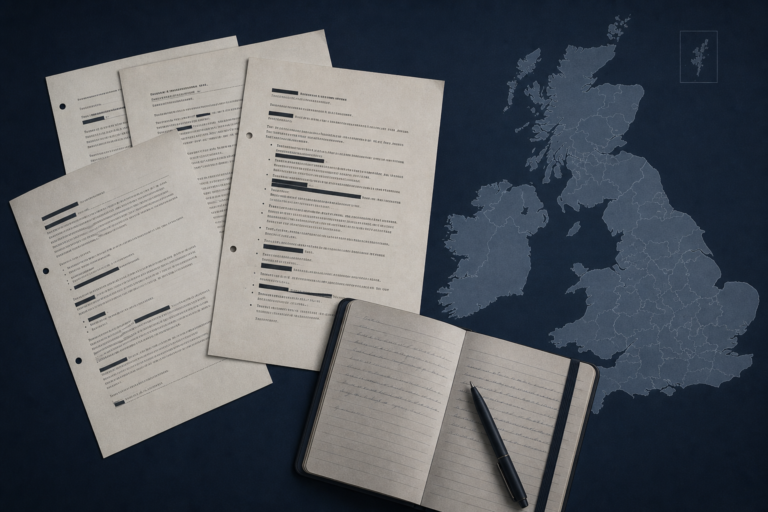
Roy Teague Says 250 British Police Officers Shared UFO Accounts
The West Midlands Police inspector says he selected 75 accounts for his book, drawn from a collection he has built since at least…
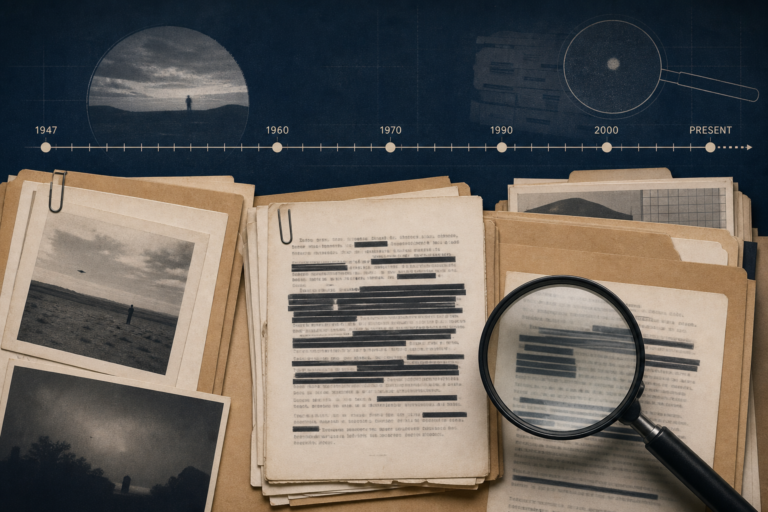
Post Links Grusch and Elizondo to Roswell-Era Crash Retrieval Claims
Its proposed 70-year narrative relies on purported MJ-12 files, Corso’s accounts and retrospective testimony; the material provides no authenticated records establishing a single…